Fetal monitoring during labor: What to expect
During labor, you’ll feel contractions and notice changes in your body. But it’s can be difficult to know how your baby is responding to labor.
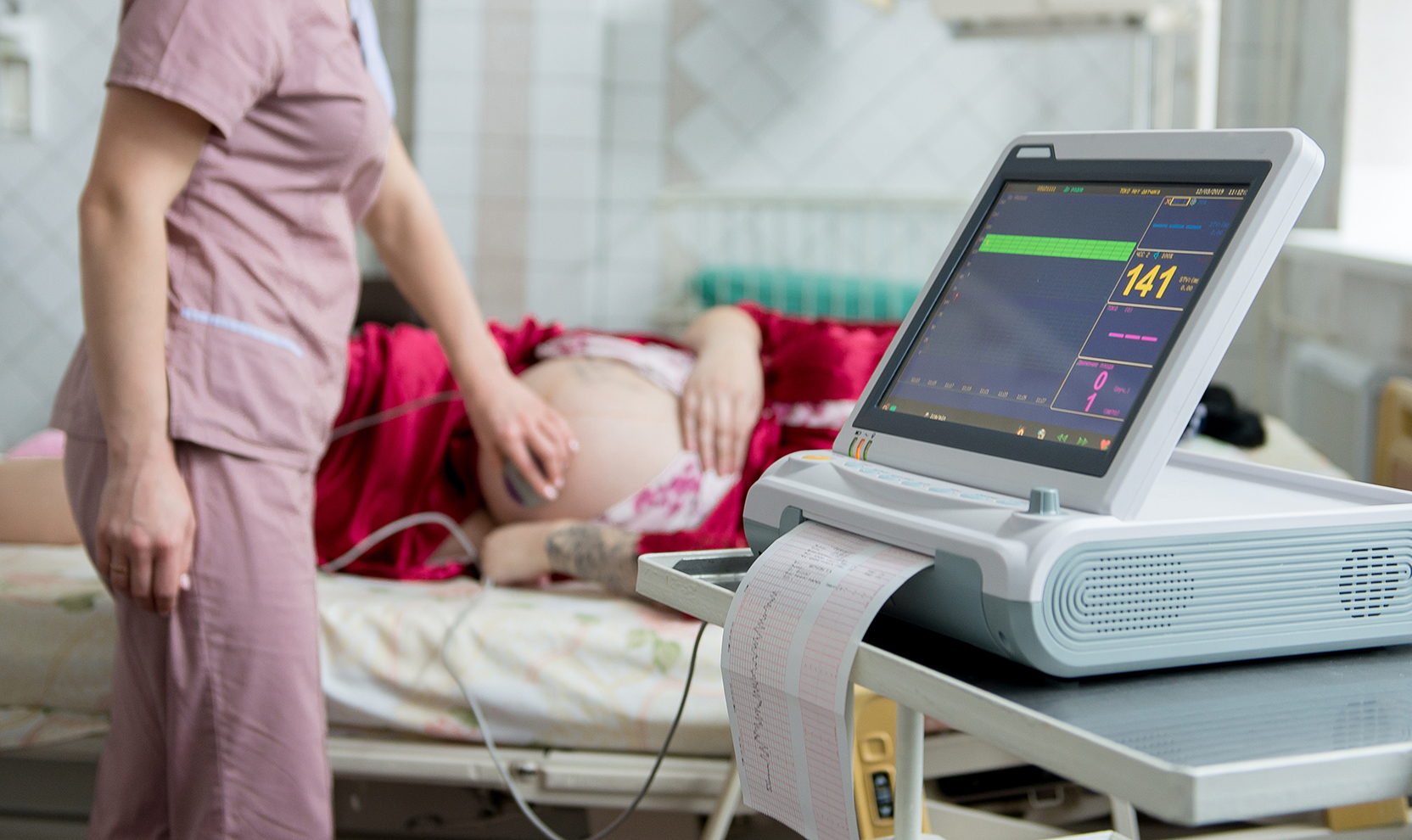
That’s where fetal monitoring comes in. Fetal monitoring allows your care team to check your baby’s heart rate and your contractions during labor. This information can help them understand how your baby is doing and whether your care plan needs to change.
Why is fetal monitoring used?
Fetal monitoring is used to track your baby’s heart rate and your contractions during labor. Sometimes, it’s also used late in pregnancy.
During labor, your baby’s heart rate can change in response to contractions. Most changes are expected, but some patterns may show that your baby needs closer attention. Your doctor, midwife or nurse can use fetal monitoring to help guide your care.
Fetal monitoring can also show how often contractions are happening and how long they last. This can be helpful for you and your care team as labor progresses.
If you have a high-risk pregnancy, go into labor early or need certain medications during labor, your care team may recommend closer or continuous monitoring.
There are two main types of fetal monitoring: external and internal.
External fetal monitoring
External fetal monitoring uses sensors placed on your belly. One sensor uses ultrasound to track your baby’s heartbeat. Another sensor measures your contractions.
The sensors are held in place with soft, stretchy belts. The contraction monitor can show how often contractions are happening and how long they last, but it doesn’t measure how strong they are.
When you arrive at the hospital or birth center, your care team may use external monitoring as part of your initial assessment. The initial assessment often takes about 20–30 minutes. If you and your baby are doing well and continuous monitoring isn’t needed, your care team may use the monitor only at certain times.
If you want to move around during labor, ask your nurse what options are available. Depending on your labor and your hospital’s monitoring equipment, you may be able to walk, change positions or use different comfort measures.
Internal fetal monitoring
Internal fetal monitoring may be used if your care team needs a closer or clearer reading of your baby’s heartbeat. It may also be used if external monitoring isn’t picking up the heart rate well.
This type of monitoring can only be used after your water has broken. A small electrode is placed on your baby’s scalp to measure the heartbeat directly.
In some cases, your care team may also need to measure the strength of your contractions. This can be done with a thin monitoring device placed inside the uterus during a vaginal exam.
Internal monitoring can provide more detailed information, but it is more invasive than external monitoring. Your care team can explain why they recommend it and what to expect.
Continuous fetal monitoring may limit how much you can move around. But you may still be able to sit up, change positions in bed or use other comfort measures. Your nurse can help you understand what type of movement is possible with internal monitors in place.
What happens if fetal monitoring shows a concern?
If fetal monitoring shows a change in your baby’s heart rate pattern, your care team will look at the full picture. They’ll evaluate your stage of labor, contraction pattern, medications, blood pressure and how your baby’s heart rate changes over time using the monitors.
Depending on what’s happening, your care team may recommend changing your position, giving fluids, adjusting medications or continuing to monitor closely. In some situations, they may recommend delivering the baby sooner.
Fetal monitoring is one tool your care team can use to help guide decisions during labor. If you have questions about monitoring or your baby’s heart rate, ask your doctor, midwife or nurse to explain what they’re seeing.
Explore related topics
Support at every step
From conception to delivery, our pregnancy and childbirth providers put you first.
Meet our care team