Your guide to routine newborn procedures
Meeting your new baby is an incredible moment. While you're soaking it all in, our team will be right there with you to make sure your little one is healthy and safe. We know newborn hospital tests can feel overwhelming — so we put together a quick guide to the routine procedures you can expect during your baby's first few days.
Antibiotic eye ointment
We’ll place antibiotic ointment on your baby’s eyes soon after delivery to prevent possible infections. This can make their eyes look wet or goopy at first.
Vitamin K injection
The American Academy of Pediatrics recommends all infants receive a vitamin K injection as soon as possible after birth to prevent vitamin K deficiency bleeding in newborns. Babies are born with very little vitamin K in their bodies, and breast milk contains only small amounts. Without help, a newborn’s levels stay low for weeks. Vitamin K plays an essential role in your blood’s ability to clot. This boost helps your newborn quickly achieve normal vitamin K levels and reduces the chance of internal bleeding in the first months of life. Oral vitamin K isn't as effective at preventing late bleeding from a deficiency, which can lead to bleeding in the brain.
Screening laboratory blood tests
When your baby is around 24 hours old, we’ll take a small blood sample from a poke in your baby's heel for two tests: a newborn genetic and metabolic screening and a bilirubin level check. The newborn screen is required by the state of California and checks for rare genetic and metabolic conditions. Many of these diseases are treatable or have special management plans to keep your baby healthy. A bilirubin test measures the level of bilirubin in your baby’s blood. Bilirubin comes from the breakdown of blood cells and high levels cause jaundice. This test helps us predict if your baby might need treatment for jaundice.
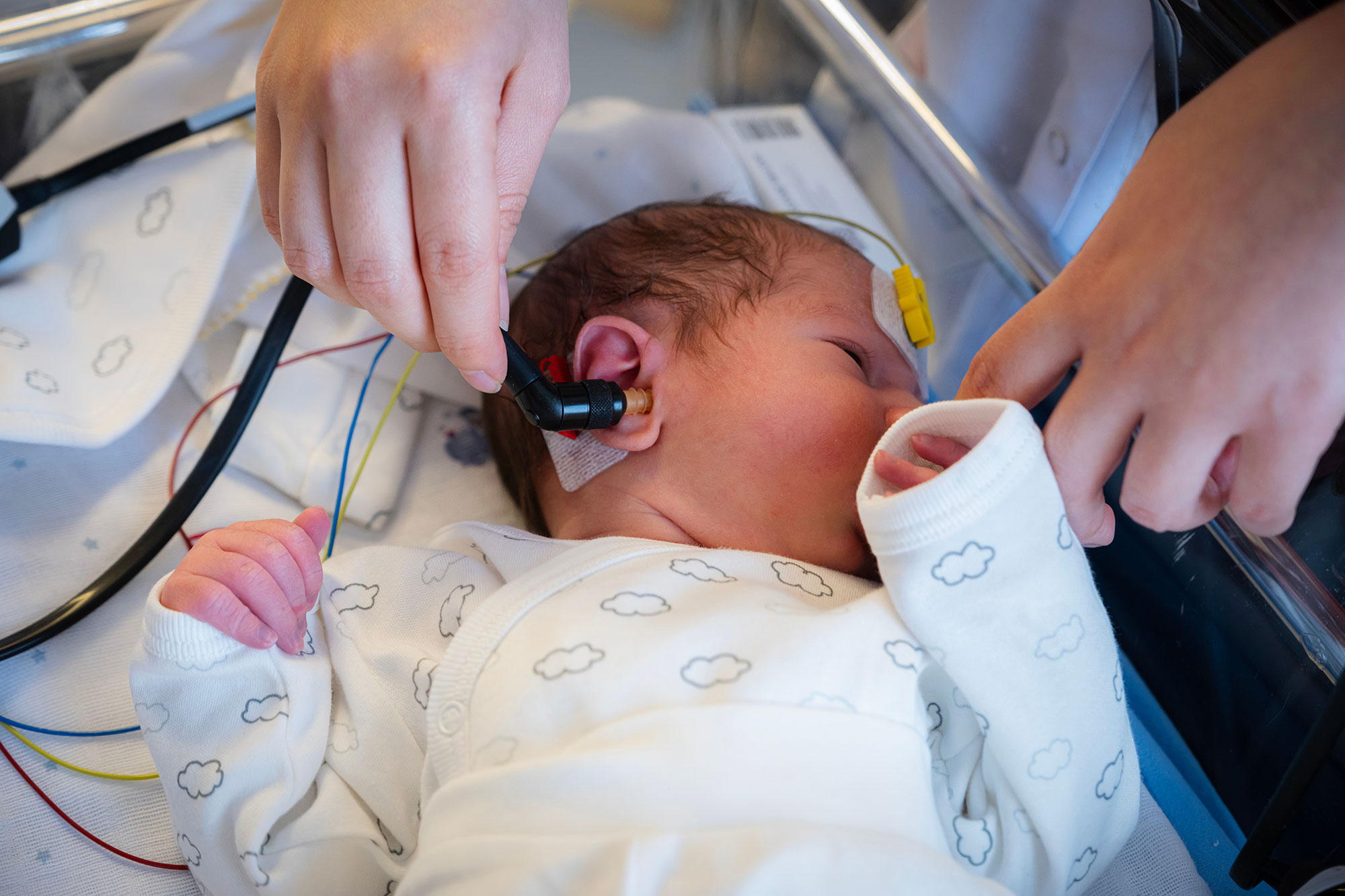
Hearing test
We’ll perform a hearing test during your first few days in the hospital. This checks for certain types of hearing loss we can detect at birth. It’s not uncommon for a baby to not pass this test initially due to fluid in the ear canal. If that happens, we’ll repeat the test before you go home.
Congenital heart screen
We perform a congenital heart screen at the same time as the blood test in most nurseries. Your nurse will check your baby’s oxygen level to make sure it’s normal. This test helps us detect very rare heart conditions. If there’s a concern, your nurse will repeat the test and let your doctor know.
First Hepatitis B vaccine
We recommend your baby receives their first hepatitis B vaccine in the hospital. This is the first of three doses and protects against a viral infection that can be passed from mother to baby. This is the only vaccination done in the hospital and it has minimal side effects. Please review the handout and consent form provided by the hospital and ask us if you have any questions.
Circumcision
This is an optional procedure for baby boys. During circumcision, the foreskin, a small piece of skin that covers the end of the penis, is removed surgically. Circumcisions are typically performed in the hospital during the first few days of the child’s life.
We know it can feel overwhelming to watch your new baby go through these tests and procedures. Just remember that each one is designed to keep your little one safe, healthy and thriving. We’re here to answer any questions you have along the way — so please don't hesitate to ask your care team.
Explore related topics
Support at every step
From conception to delivery, our pregnancy and childbirth providers put you first.
Meet our care team