Combat Veteran Gets a Life-Saving Assist
California Pacific Medical Center
CPMC Davies Campus
2025Contributors: Nobl Barazangi, Joey English
RICHARD SANDERS: I spent a number of years
in our nation's finest in the Army.
Got to experience almost every combat operation
that we were involved in, from Desert Storm up
through Afghanistan.
When your life is in the hands of another,
you learn a different level of trust.
And it really hit home after the strokes.
[MUSIC PLAYING]
I first started having the initial symptoms.
I felt this pressure in my head.
I would get massively dizzy.
They did a number of scans here in Modesto.
So they referred me to Dr. Barazangi in San Francisco.
NOBL BARAZANGI: My first consultation with Mr. Sanders
was a video visit.
Although we have many excellent certified stroke centers,
they don't all have the same subspecialists or same services.
So this integrated network of stroke facilities
is really important.
The blood vessels in the back part of his brain
were basically blocked.
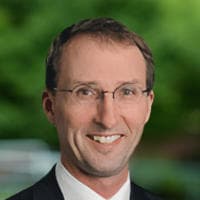
I referred Richard to Dr. English, who's
a neurointerventional surgeon.
JOEY ENGLISH: We have to have an integrated
approach to the patient.
We can get the right patient to the right place
for the right treatment within our system.
And that's the value of the Sutter Health Network.
[MUSIC PLAYING]
[UPTEMPO MUSIC]
ANALUSIA SANDERS: He called Ryan, our son.
Ryan comes running in the room, saying, "Dad needs you.
Something's wrong with him."
So we got him to Memorial.
And then they ran some tests.
And they also decided to contact Dr. English.
And he said you need to get him here now.
RICHARD SANDERS: They got me transported out to CPMC.
And apparently I was sitting in bed,
and the speech pathologist-- literally right in front of her,
the whole left side, just everything sagged.
JOEY ENGLISH: You have very limited time
to act when someone's having a stroke.
It really is an emergency.
RICHARD SANDERS: They got me down
into surgery within minutes.
A blood clot had completely blocked
those arteries that provide oxygen
to the back half of my brain.
They cleared the blockage.
Miraculous is really the only word to describe it.
Every day I'm thankful that I'm vertical and breathing.
My care team, from the housekeeper to Dr. English,
superheroes in every way.
One of the most common things in the military
now is using challenge coins.
Not only is it a record of where you've been, but who you know.
I felt that Dr. English had touched my life in such a way
that he had earned the respect to carry one of these coins.
[TRIUMPHANT MUSIC]
I wouldn't be here today if it weren't
for Dr. English and the entire care team that took care of me.
in our nation's finest in the Army.
Got to experience almost every combat operation
that we were involved in, from Desert Storm up
through Afghanistan.
When your life is in the hands of another,
you learn a different level of trust.
And it really hit home after the strokes.
[MUSIC PLAYING]
I first started having the initial symptoms.
I felt this pressure in my head.
I would get massively dizzy.
They did a number of scans here in Modesto.
So they referred me to Dr. Barazangi in San Francisco.
NOBL BARAZANGI: My first consultation with Mr. Sanders
was a video visit.
Although we have many excellent certified stroke centers,
they don't all have the same subspecialists or same services.
So this integrated network of stroke facilities
is really important.
The blood vessels in the back part of his brain
were basically blocked.
I referred Richard to Dr. English, who's
a neurointerventional surgeon.
JOEY ENGLISH: We have to have an integrated
approach to the patient.
We can get the right patient to the right place
for the right treatment within our system.
And that's the value of the Sutter Health Network.
[MUSIC PLAYING]
[UPTEMPO MUSIC]
ANALUSIA SANDERS: He called Ryan, our son.
Ryan comes running in the room, saying, "Dad needs you.
Something's wrong with him."
So we got him to Memorial.
And then they ran some tests.
And they also decided to contact Dr. English.
And he said you need to get him here now.
RICHARD SANDERS: They got me transported out to CPMC.
And apparently I was sitting in bed,
and the speech pathologist-- literally right in front of her,
the whole left side, just everything sagged.
JOEY ENGLISH: You have very limited time
to act when someone's having a stroke.
It really is an emergency.
RICHARD SANDERS: They got me down
into surgery within minutes.
A blood clot had completely blocked
those arteries that provide oxygen
to the back half of my brain.
They cleared the blockage.
Miraculous is really the only word to describe it.
Every day I'm thankful that I'm vertical and breathing.
My care team, from the housekeeper to Dr. English,
superheroes in every way.
One of the most common things in the military
now is using challenge coins.
Not only is it a record of where you've been, but who you know.
I felt that Dr. English had touched my life in such a way
that he had earned the respect to carry one of these coins.
[TRIUMPHANT MUSIC]
I wouldn't be here today if it weren't
for Dr. English and the entire care team that took care of me.
In the military, Modesto resident Richard Sanders learned about the importance of teamwork when a life is on the line. That hit home recently when Sutter Health's CPMC team worked to save his life following a series of strokes.
Discover Similar Stories
Choose a service topic below to read more stories like this one.
Comprehensive Stroke Care
At Sutter, we offer a full continuum of care for stroke, from initial treatment through recovery.
Explore Where Care Happened
Meet the Care Team

NeurologyNeuroradiology

NeurologyVascular Neurology