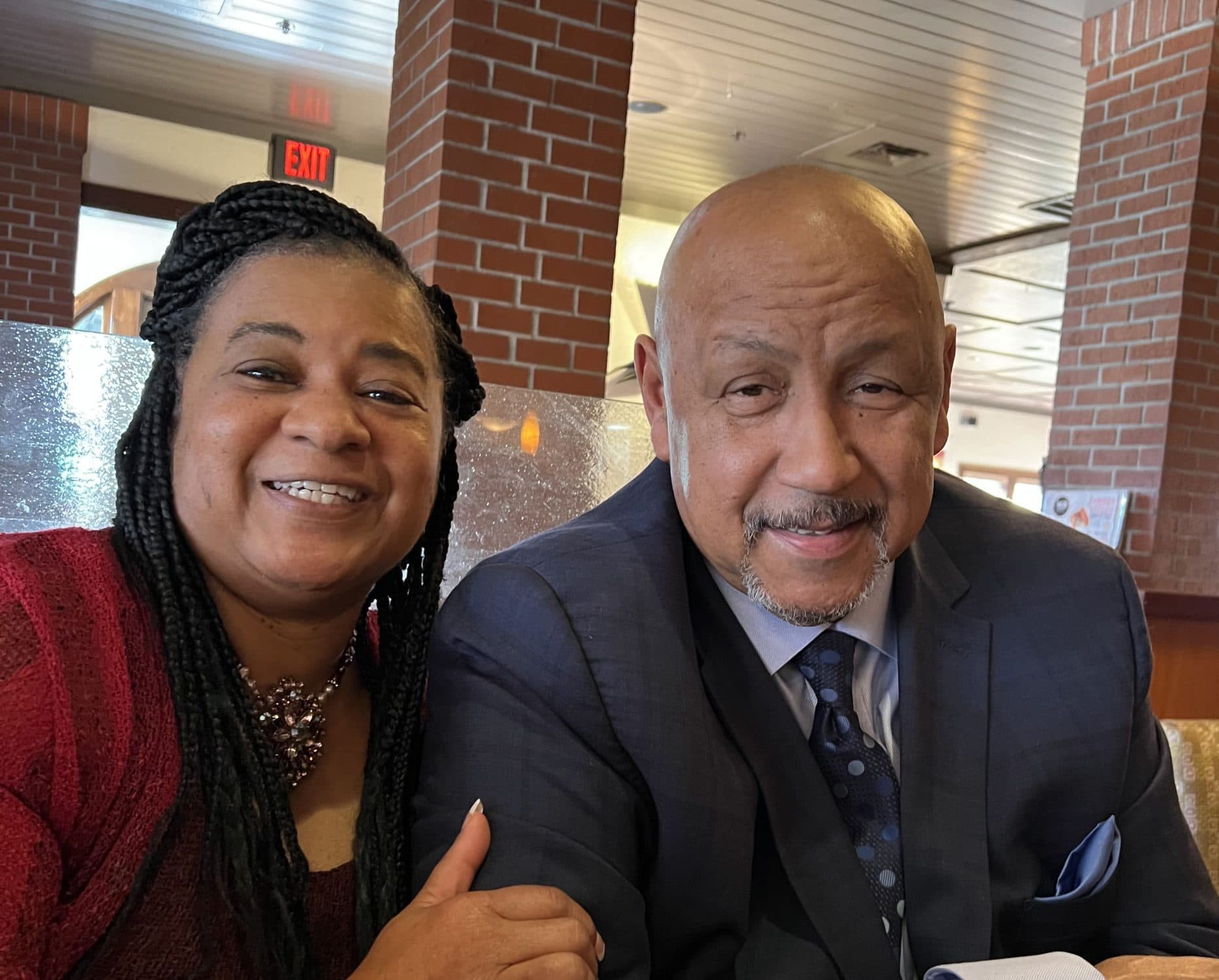
Gwen McCauley received a clean bill of health during her regular checkup in March. But just two weeks later, a racing heart and dizziness lead to a trip to the emergency department at Sutter’s Alta Bates Summit Medical Center in Oakland. The 65-year-old Oakland resident’s symptoms worsened while she was in the ER. She was eventually admitted to the hospital for tests which — to her astonishment — revealed a bleeding mass, called a gastrointestinal stromal tumor, in her small intestine.
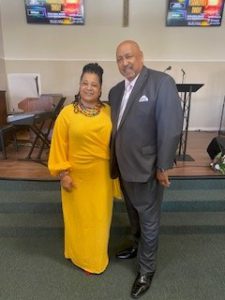
Gwen McCauley, pictured with her husband Pastor Joseph E. McCauley, had successful robotic-assisted surgery at Alta Bates Summit Medical Center.
McCauley was shocked at the diagnosis. The busy pastor’s wife, semi-retired patient service representative and grandmother of two says she’s always taken good care of herself. She wouldn’t have any reason to suspect a lurking tumor. And she dreaded having another abdominal surgery. Having gone through two C-sections and a hysterectomy, she knew first-hand how invasive and painful recovery from traditional abdominal surgeries can be.
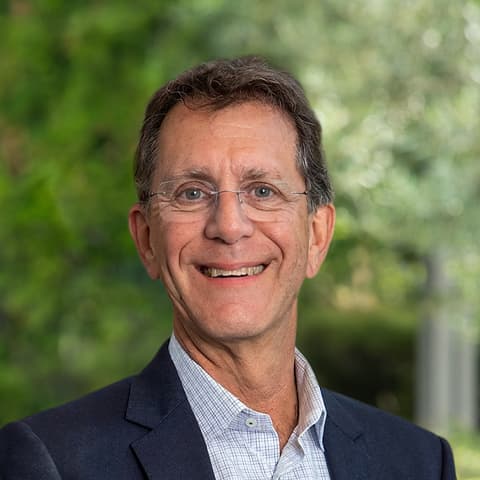
Once her symptoms were stabilized, McCauley was referred to Steven A. Stanten, M.D., a general and minimally invasive surgeon at Alta Bates Summit.
The good news: Dr. Stanten suspected the tumor was not malignant, but because of its potential for bleeding and because it was large — the size of a toddler’s fist — he recommended it be removed as soon as possible.
More good news? Dr. Stanten could remove it using robotic assisted, minimally invasive surgery which offers several advantages over traditional “open” abdominal surgery or laparoscopic surgery.
“Robotic-assisted surgery generally results in fewer complications, shorter hospital stays and dramatically reduced post-operative pain for patients, which typically means patients don’t need much or sometimes, any, narcotic pain medication,” says Dr. Stanten.
Pioneering Robotic-Assisted Surgery in the Bay Area
Alta Bates Summit is a pioneer in robotic-assisted surgery and was one of the first medical centers in the Bay Area to invest in robotic surgery technology, acquiring its first da Vinci surgical system in 2003. In May 2024, Alta Bates Summit becomes the first hospital in the Bay Area to reach the milestone of 10,000 robotic-assisted surgeries.
Today, Alta Bates Summit has four da Vinci robotic systems for intra-abdominal procedures which are used by more than 30 surgeons from a variety of surgery specialties including general, surgical oncology, bariatric, urological, gynecological cancer, thoracic, gynecologic and urogynecologic. The medical center also has a MAKO orthopedic robot for hip and knee replacement surgery.
Rock C. Liu, M.D., medical director of the Alta Bates Summit robotic surgery program, says “We’re so proud to be the first to reach the 10,000 robotic assisted-surgery milestone in the Bay Area because this technology is so beneficial to our patients.”
“Robotic surgery has allowed our highly trained surgeons to operate with unmatched precision, and as the technology has evolved, we have increased the variety of surgical options and the quality of care available to the community,” added Dr. Stanten.
Watch as Dr. Liu Explains Robotic Surgery
Rita Kwan-Feinberg, M.D., a surgeon with Sutter East Bay Medical Foundation and chief of staff of Sutter’s Alta Bates Summit Medical Center in Berkeley says, “The achievement of this milestone is a great reminder we’re talking about thousands of our patients who have benefitted from robotic-assisted surgery,” says . “It’s so rewarding to physicians, nurses and staff to offer patients this advanced technology and play a part in them reaching their best health.”
Dr. Liu believes in sharing his expertise with robotics assisted complex hernia surgery to the benefit of patients around the country. In fact, Alta Bates Summit is a designated a Robotic Hernia Epicenter Site by Intuitive Surgical, manufacturer of the da Vinci. Each year, about 40 surgeons from around the country come to Alta Bates Summit’s Oakland campus to learn the latest techniques in complex hernia repair from Dr. Liu.
Robotic technology at Alta Bates Summit, part of the not-for-profit Sutter Health system, is made possible through philanthropic gifts. Other Sutter hospitals that have reached the 10,000 robotic surgery milestone include Sutter Medical Center, Sacramento and Sutter’s Memorial Medical Center in Modesto.
One in 10,000
Within just a few hours of her robotic assisted surgery, McCauley was walking the halls of the unit. (Walking after abdominal surgery speeds recovery and helps people return home more quickly.) She was feeling so good she says, she stopped to chat with nurses at the nurses’ station and other walking patients. She even prayed with families in the surgery waiting room as they awaited news of their loved ones’ procedures.

“The staff at Alta Bates Summit was phenomenal,” says McCauley. “Everyone from the pre-op nurses to my anesthesiologist to the nurses on the surgical unit were so sweet and caring, offering to help me in any way they could. And I can’t say enough about Dr. Stanten…he is wonderful!”
McCauley was discharged home on the third day after her surgery. “I am so amazed at how quickly I recovered and how little pain I had. I only needed a couple of Tylenol,” she said.
“I feel so blessed to have had Dr. Stanten do my surgery with the robot. I encourage anyone who needs abdominal surgery to look into robotic surgery because it has been so wonderful for me.”