


Resident Testimonials
PARRIS DIAZ: Hi.
My name is Parris Diaz.
I'm born and raised in Los Angeles, California.
I came here to the Bay Area for the first time for undergrad
at San Francisco State University.
I eventually went to medical school at UCLA.
And I was really determined to come back here to the Bay, where
I did part of a urology residency, and, after that,
decided to come here to CPMC.
I chose CPMC because I felt like it
was a place where I could get the best bang for my buck
in terms of having great people, having great training,
and also a place that could propel me forward in terms
of the field that I was pursuing,
which is radiology now.
The thing I liked most about CPMC has to be the people here,
whether it be the staff in the cafeteria
or whether it be the individuals that are teaching me
on a daily basis.
Everyone just has such a positive energy
and just, overall, want to see you do very well,
whether that be in your personal life or your professional life.
I found the faculty at CPMC are always
willing to meet you where you are and try to find ways to make
you better, whatever your goals are,
and setting individualized goals for you.
In terms of rotations, I think our rotations are great.
They give you just enough to make you get your feet wet
and feel like you're being that doctor and getting challenged.
But also, they're not too long to that point where it feels
like they're never-ending.
And so you're constantly changing and moving
around the hospital and getting comfortable in a variety
of situations.
And we have options in terms of doing
a variety of elective rotations here at CPMC,
whether that means doing an away rotation at another institution.
I found that our faculty have been really OK with that
and supportive in us getting that training from the outside,
as well.
I think the thing that's most unique about CPMC
is the energy that I feel in this place.
I feel like people truly, truly care about one another.
And while we do amazing work in our taking care of our patients
inside of the hospital, we're also
having a great time outside of the hospital, as well.
And I feel like that balance is something that you don't always
have in a residency.
And whether that be the preliminary program
or the categorical program here at CPMC,
I find that both of those programs
have that balance, as well.
I would say, overall, I would highly recommend CPMC,
as someone that did a residency partially
at another institution.
This place just emits positivity,
emits a growth mindset.
And overall, the people are amazing.
ROBERT ENDERS: Hello, my name is Robert Enders.
I'm a second year internal medicine resident
at CPMC in San Francisco.
I originally grew up in Kansas City, Kansas,
where I lived until I was 18, before I
went to undergrad at the University of Virginia
in Charlottesville, Virginia.
I ended up living in Washington DC for about four years
after undergrad, before I went back to the University of Kansas
for medical school.
So what I like most about CPMC is both the faculty
and the people overall.
The faculty are great.
It's a learning environment, which is really conducive to us
as residents.
It's a community feel, where it's
programs a little bit smaller, but we get a lot of high acuity
from both within San Francisco, but also the Northern California
region.
The other thing that I like about CPMC
is the diversity within San Francisco.
It's truly a melting pot here.
It's something that I was seeking out
when I was looking for residency programs.
Within a given day, I'll use interpreters
on pre-rounds for Mandarin, Cantonese, Russian, Spanish,
you name it.
So what I like most about the faculty at CPMC
is how approachable all of our faculty are.
That's not only just our teaching faculty, but also
within the consultants.
Everyone is always willing to have it a teachable moment.
I never fear calling consults, like I did necessarily
when I was in medical school.
Some of that comes with experience,
but also, it's just that everyone
is nice, willing to do teaching, and is
supportive of bolstering our learning environment here
at CPMC.
So for our rotations, they recently
implemented a 4 plus 2 schedule, which is something
that they did off of feedback, which is something that I really
appreciate.
A programs always trying to respond to feedback, and one
of the things that they are always looking at
is our rotations.
The rotations are nice, because for the most part,
you'll be on a rotation for a max of two weeks.
So it's enough time to get comfort,
but it's also enough time, where if you're
kind of dragging through it, that you're
only on it for two weeks.
We have a lot of time, also, that if there's something
that you want to dive further into, whether you're
a fellowship driven or just curious,
you'll have that opportunity.
Also, being within San Francisco,
we have a lot of specific clinics
that, I think, you might not get exposure
to elsewhere in the country, such as, like,
specific HIV clinic.
We get exposure with our free health care
clinic and multiple other clinic opportunities.
Overall, everyone here is really supportive of one another.
We are all working towards to achieve our collective goals,
whether we have fellowship in mind versus patient care.
Everyone's working in supporting each other, which
is really fantastic.
[MUSIC PLAYING]
MICHAEL LAURICELLA: Hey, I'm Michael.
I'm one of the interns at CPMC Internal Medicine Program.
I was actually born in San Francisco, and I grew up here.
I'm a native San Franciscan.
I went to Harvard for undergrad.
I actually ended up falling in love with medicine,
and I went to UC San Diego for my medical school.
There are so many reasons I chose CPMC.
It not only is a place that I respected as a kid, I actually,
my first shadowing experience was at CPMC in high school.
It has an academic feel.
There's a lot of research going on here.
We have a great GI department, great cards department
among many who produce a lot of great literature
and new discoveries.
I felt like people got along really well
and were pushed hard in all the right ways.
I think our hospitalists are 15 to 20.
There's 15 to 20 hospitalists.
And even in the first month, I've
almost worked with all of them.
They get to know you really well.
I feel like they're your friends.
They're your colleagues, they're your mentors.
And every time you show up to work, it's not a new person.
That's true with the specialty departments, too.
We have a smaller faculty, and so you get
to know everyone really well.
My favorite part about our rotations
is that so, if you're on wards, for example--
I just came off wards--
it's busy, but you do have a moment to relax,
I think, in the afternoons after rounds,
after you got some of your consults in--
which is really, really nice, so you
don't feel like it's like a sprint all day.
I know that's how I felt in med school sometimes.
It just felt like a sprint all day.
I'm on cards right now and cards is really hard.
[LAUGHS] It's a hard rotation.
I think CPMC is not the easiest place to train.
I think it still stretches your mind,
pushes you in the right ways, ask you to be better.
CPMC is, in my mind, a very San Franciscan program.
It has a multiple campuses and it caters and serves just
all the different populations of San Francisco.
There's the Russian-speaking population,
and the Taishanese-speaking population.
There's the people at the PAC campus,
and then there's people in the Tenderloin that come through.
So it's just a true slice of San Francisco
unlike you get anywhere else.
And then beyond that, it's a Sutter center.
So it gets in transfers from all over northern California.
So you have people coming from Clearlake, from Sutter,
from Roseville, and from Sacramento.
So you get a slice of all of California
or Northern California in that way.
The most important thing is that we
have just a really nice culture here.
And if culture is important to you,
and having a fun residency experience is important to you,
I think you should come to CPMC.
[MUSIC PLAYING]
MARY EARP: Hi, I'm Mary Earp.
I am a third year resident at CPMC.
I'm from Portland, Oregon, and I went to school
in Oregon, University of Oregon for undergrad,
and I went to OHSU for medical school in Portland.
I chose CPMC for residency partly because of geographics,
because San Francisco's an amazing city to live in,
and it was close to home for me.
But it also met a lot of other requirements that I had,
like having a slightly smaller residency so I would
get to know everyone and having a good combination
of diverse pathologies, but also getting a lot of bread
and butter medicine.
Additionally, I love our patient population is very diverse.
I get to see a lot of not only different pathologies,
but a lot of different types of patients.
I feel like I learn a lot every day just because of that.
The faculty at CPMC are also amazing.
I love how much I get to learn from them and the environment
in which we learn.
They ask questions and they teach us every day,
but I always feel safe when I'm learning.
And I feel like I've become close
with a lot of my attendings.
I've gotten to know all of them.
And it's nice to have both a personal and a professional
relationship with all of our attendings.
Something that's special about CPMC
specifically is how robust our cardiology rotations
are, which I have loved a lot.
We have great attendings in cardiology that teach us a lot.
And you get to do both the critical care
from the cardiology standpoint in addition to the medical ICU.
I think what stands out about CPMC is the group of people
that we have here.
Everyone is kind and is motivated to provide great work
and to also create a great environment to work in.
We have friendly people here and people
that really like to learn and want
to do the best for our patients as well.
One thing I really want people to know about CPMC
residency is how close our program administration
is with us as well.
Something that's very special about our program too.
Our program directors and APDs come to our morning
reports almost every day and our noon conferences.
And so you get to be very close with them
as well, which is pretty special, because I've
gotten to know them on a personal level,
will say hi to them and see them in the hallways most days.
So it's nice.
You can provide direct feedback, but also
just know about things that are happening
in the residency in real time rather
than having to go through a whole chain of command for that.
[MUSIC PLAYING]
My name is Artin Galoosian.
I am originally from Los Angeles.
And I'm currently actually one of the chief residents--
one of three chief residents here at CPMC.
So I chose CPMC for a multitude of reasons.
And in a bizarre way, CPMC actually chose me.
I remember distinctly during my interview--
and I am sorry that we can't meet you in person--
but during my interview, I knew I was going to come here.
I knew-- however the rank list or match process went--
I knew this was where I was going to end up.
And it was a sense of the community
that I felt during my interview day,
from the program administration--
Lori Wong, who is one of the most amazing coordinators,
actually baked a cake during our interview day--
all the way to the residents I met during rounds
when we were interviewing.
It truly felt like this was the place for me,
and it truly felt like this is where I am going to end up.
So, CPMC is a major quaternary referral center
for the entire state of California
and beyond-- our catchment area goes all the way to Oregon
and parts of Nevada.
And that's a really special thing
because we are a community-based program.
We're a community-based hospital so we encompass the values
of a community hospital--
meaning we serve our community.
However, what's special about CPMC
is the strong academic ties that we
have to UCSF and to Dartmouth Medical School.
And with those academic ties actually
come with tremendous opportunities
for clinical research, if you're interested.
I was very fortunate enough to be involved
with the research in the beginning of residency--
actually during my intern year.
And we've been very productive.
Since we are a small enough program,
it's very easy to get one-on-one mentorship
with specific faculty members who
are producing tons of research that you're then
able to publish, present at multiple national meetings.
Huge blessing for me to come to a program like CPMC that's
just small enough that you get that individualized attention
that you need to thrive in a research program.
And CPMC has trained me to become
an excellent clinical educator.
So during your medicine clerkship months,
you will always have a Dartmouth medical student
in their third year.
And you'll oftentimes always have a fourth year
sub-internship either from UCSF or other medical schools
around the nation.
So there is no shortage of teaching opportunities.
And with that said, we are in a profession
of lifelong learning.
Thank you for taking the time to visit our website
to get to know our program.
We understand these are unprecedented times.
I hope you and your family are all staying
safe during the pandemic.
And we really appreciate that you're getting to know us,
and we truly cannot wait to get to know you.
Thank you.
My name is Siu-Wei Huang.
I went to university at UC Berkeley-- go Bears.
Then after that, I went to Drexel for medical school,
and I decided to come out to see CPMC for a residency.
And I was completely just blown away
by the medicine that I saw, my co-residents, co-interns,
who were helpful in getting me settled in
and seeing patients quickly, as well as the attendings,
and the amount of teaching that I saw from basically everyone.
In residency, I got a chance to see a whole lot
of different people.
And not only is that true in the inpatient side,
but it's also true in the outpatient side.
At Pacific Primary Care, we see lots of patients
from all walks of life.
They come from all different backgrounds,
and they come from all different social-economic backgrounds
as well.
So you really get to see the wide breadth of humanity
through the medical care that we provide.
For those applicants who are applying right now,
the one thing I really want you guys to know
is that, really, the people here are what makes it so great.
Intern year residency, it's going to be tough, but really
know that when you come here, you're going to be supported.
You're going to have excellent education
from your coresidents, from the APDs,
from your chief residents, and from all the attendings.
And know that if you need any help along the way,
this is not a place where you need to be afraid to ask.
Feel free to ask anyone around for any help.
I'm a third-year resident here at CPMC.
I went to undergrad at the University of Southern
California-- fight on, Trojans.
I went to med school at UC San Diego,
and then I'm here now at CPMC for residency.
I actually couples matched, and this was
my last interview on the trail.
I really enjoyed it, not only because it
was my last interview, but I truly
felt like it was somewhere where I could be happy,
getting great teaching, learning a lot
to become a first-class clinician,
but also being supported by GME, my coresidents,
and being really, really happy.
So right now, I am applying for a pulmonary critical care
medicine fellowship, and I really
think that this professional career choice was largely
thanks to my training here at CPMC.
A lot of the training that we get, I feel,
is very, very impressive.
But in the ICU in particular, I feel like the education
that we get is very robust.
All the attendings are so enthusiastic about teaching
and really want to see you succeed.
So that really encouraged me to go into this field.
And the mentorship that I've received,
the research opportunities have been plenty for me,
and I feel completely prepared for my interviews
and my next steps forward as a pulm-crit fellow.
As someone who is ambidextrous, I love anything
where I can use my hands, procedures with central lines,
arterial lines, thoracenteses.
You name it, I've had the opportunity
to perform them and get quite good at them.
And again, it's a lot of the support and teaching
from the attendings that has helped
me become proficient at them.
What I really love most is everything that I
saw on day one--
on my interview day-- that really encouraged and compelled
me to choose this program hasn't changed,
and I'm saying that as a really good thing.
I saw that I would get really strong training here.
And I've learned so much and grown so much as a physician
and as a person.
And that's really because at CPMC,
I feel extremely supported.
And if you want to learn a lot and feel like you're
part of a really nice and loving community,
I think you should definitely come here.
is the feeling of family among all of us
as residents, including our faculty.
I did sub-I actually, my fourth year of medical school here
at CPMC, and I instantly knew, just
based on the way they welcomed me with open arms
into their community, I knew I would thrive here.
But one of the unique things about our program
is our resident-driven point-of-care ultrasound
curriculum.
And I had an experience with a case
recently where this curriculum really
helped prepare me to appropriately care
for this patient.
And he was a young man who was diagnosed
with large pulmonary emboli.
And we were able to do a point-of-care ultrasound
on his heart to determine that he did not have right heart
strain, and therefore appropriately triaged him.
I think because CPMC is a quaternary referral
center for the entire state of California,
the kinds of patients we see come from all walks of life
and all ethnic backgrounds.
And I think it's really important for us
to have that kind of education to adequately care for people
who come from all backgrounds.
And with those backgrounds come various different pathologies
that I think I wouldn't have otherwise seen,
had I trained at another place.
Here at CPMC, I really feel that our program leadership
and our teaching attendings have a vested interest in helping us
as residents really navigate what it is that we
want to do with our future.
I really get the feeling that they understand that
our futures are not a one-size-fits-all,
and they really try to hone in on what it is that you're going
to be passionate about for the rest of your life.
And how that speaks to me is initially,
I was contemplating applying into cardiology directly
out of residency, or taking a couple years as a hospitalist.
And I found that they were overwhelmingly supportive
of that decision, and were able to pair me up with two mentors,
actually, to help guide not only my hospitalist career
path, but also my potential cardiology path in applying
for fellowship.
So I think training in residency here in San Francisco
is really a unique experience, because you
know as busy as our lives get during residency, being
in a place like San Francisco is really unlike any other.
The kinds of culture, of course, that we have here
is unsurpassed.
But also just the people that live here, we
have a certain type of open-mindedness and acceptance
that I think is really important and kind of
helps to shape the way you care for people every day.
I went to medical school on the east coast.
And I was couples matching with my husband.
And I was looking for preliminars
that would help us end up at the same place
for my preliminar for our derm and for our psychiatry.
And through that, I found CPMC.
And just immediately, on my interview day,
I was so drawn to this tremendous energy here
of camaraderie and support.
And that initial feeling that I got
on my interview day, and then the leap of faith
that I took to pick it, it's just
turned out to be completely true throughout my year
here, that this is a uniquely special place.
And the amount of support, friendship here, as well as
the tremendously interesting cases that we have,
being in the heart of San Francisco,
has made this the most amazing place to be for my preliminar.
Now that I'm just about one week away
from being finished with a preliminary year
in internal medicine, I can definitely
say that my training care, I think,
has set me up with a really strong foundation
for a career in dermatology.
It sounds sort of cliche.
But intern year is all about the art
of growing from a medical student to actually becoming
a doctor, and learning what doctoring means,
and how exactly to do that and make it happen.
I think that I've been exposed to the perfect patient volume
to have both a really happy year, where I feel well
balanced and supportive, but also a really rigorous year,
where I've learned how to process
a tremendous amount of new clinical information
really rapidly.
Our unique location, with such diverse patients,
I feel like I've learned about-- a lot
about the social determinants of medicine,
and about social barriers to discharging patients,
and how to think about patients within the context
of their environment.
And also, it's been really fun as a prelim,
is that we see such interesting, diverse patients
as a tertiary referral center, that I've
gotten to see a lot of very interesting cutaneous
pathology from Leukocytoclastic Vasculitis,
secondary to a MRSA Endocarditis, to this morning,
I have a patient who might have Osler-Weber-Rendu.
So it's just been phenomenal breadth of exposure.
because, talking with people who trained her in the past,
they talked with me about a family
environment, collegial environment, really good cases
to learn from.
When I came here for my interview, talking with people,
that sense was apparent from the start.
Everyone here was very welcoming and warm, inviting,
and talked to me about all the array of cases that
are available here as well.
And even though a half day of interviews
is hard to get a full picture, once I showed up and started
training here, it was also apparent from the start,
people here were very excited to work with me.
They understood my background from everything
in my application.
And so it was all very fresh in their mind, talking with me.
Intern year, wherever you're at, will be challenging, mentally
and physically challenging.
But one of the things that I really like about CPMC
are that the people, here the attendings, the co-residents,
all the staff at the hospital.
And showing up every day is something
I look forward to, even when I am facing a full census.
Knowing that the people around me
are going to be supportive and fun to be around
make showing up to work every day that much more rewarding.
One of the things I especially appreciate about CPMC
is the wide array of cases that we get here,
not just locally, but throughout all of northern California,
people coming from hundreds of miles away for treatment
of complex diseases, from infections to neurologic cases
to advanced heart failure cases as well.
One of the exciting, more exciting parts of my intern
year has been my rotation on the advanced heart failure service,
seeing patients with LVADs getting transplant evaluations
and getting follow-up care afterwards.
And those are cases that I know I'll see in the operating
room as an anesthesia resident.
And as an anesthesia prelim, it's
exciting to see those cases from the medicine side
and giving me a little bit of a background as I go forward.
So when I see them in the operating room,
it's not completely new.
Thank you for your interest in CPMC.
I know that if you come here, you'll
have the same great experience that I had--
great people, great cases, and a great city to live in.
you actually get the level of patient complexity
that you get in a lot of academic centers.
It's actually one of the Sutter, you
can say tertiary or quaternary referral centers.
So the fact that we do complex surgeries here,
we do a lot of transplants here, to me,
graduating from med school, that was a really big draw.
And then, and I was not disappointed with my training
here.
It pretty much delivered more than I can possibly
imagine and more.
I originally came to CPMC thinking
I'm going to become a community hospitalist.
Kind of serendipitously, CPMC introduced me to cardiology,
and I just really fell in love with it.
And then now, looking back, I don't regret it at all.
Because it actually opened me to this whole other world
of advanced heart failure and transplant that I now
am discovering new passion.
And it's very exciting.
And I really appreciate CPMC getting me this far,
and then to expose me to so many things that constantly inspires
me.
The first was that when I came to interview here,
I could tell that it was a group of people
that genuinely enjoyed working with each other,
and that it was a very strong, family atmosphere.
And I think that CPMC was great for me.
Like I said, I'm going into radiology.
I have a pretty strong interest in IR.
And I think that I had plenty of opportunity to work with the IR
group here and get lots of hands-on experience
with procedures and really being involved with what they do.
And I think that's true for a lot of the other specialties
as well.
You can really kind of create electives
if there's not something that fits what you want to do.
And the Chiefs are really supportive of that,
and they want to make sure that they're
able to teach you the training that you
think is going to be necessary for you moving forward.
So I've had nothing but great things to say about the year,
and I would 100% choose CPMC again.
I would love to come back if I could find a job here,
several years down the road.
But it would be an awesome place to work as an attending.
CHRISTINA RYU: I chose CPMC because of the culture.
I know you're going to hear this over and over again,
but I fell in love with the program
when I interviewed here.
I was interviewed by Dr. So and Dr. Edson,
and I thought that they were just so nice and caring.
And when I met more attendings and more residents,
that's the culture that--
that was the prevailing culture here.
And it was clear to me during the past three years
that the program really cares about you.
I feel very comfortable bringing up any feedback, any comments,
and I know that the chiefs, the program directors
will listen to me and take everything
that we say into account.
During the last three years, because it's
a quarternary hospital, we've seen a lot
of very interesting cases.
I remember my intern year, in my first month,
I saw a case of thyroid storm and a pheochromocytoma.
So we've been seeing a lot of interesting cases,
whether it's in endocrinology or cardiology.
This morning, we saw a case of severe mitral leakage
from mitral valve prolapse.
And I think you can see interesting cases
in every field.
[MUSIC PLAYING]
PARRIS DIAZ: Hi.
My name is Parris Diaz.
I'm born and raised in Los Angeles, California.
I came here to the Bay Area for the first time for undergrad
at San Francisco State University.
I eventually went to medical school at UCLA.
And I was really determined to come back here to the Bay, where
I did part of a urology residency, and, after that,
decided to come here to CPMC.
I chose CPMC because I felt like it
was a place where I could get the best bang for my buck
in terms of having great people, having great training,
and also a place that could propel me forward in terms
of the field that I was pursuing,
which is radiology now.
The thing I liked most about CPMC has to be the people here,
whether it be the staff in the cafeteria
or whether it be the individuals that are teaching me
on a daily basis.
Everyone just has such a positive energy
and just, overall, want to see you do very well,
whether that be in your personal life or your professional life.
I found the faculty at CPMC are always
willing to meet you where you are and try to find ways to make
you better, whatever your goals are,
and setting individualized goals for you.
In terms of rotations, I think our rotations are great.
They give you just enough to make you get your feet wet
and feel like you're being that doctor and getting challenged.
But also, they're not too long to that point where it feels
like they're never-ending.
And so you're constantly changing and moving
around the hospital and getting comfortable in a variety
of situations.
And we have options in terms of doing
a variety of elective rotations here at CPMC,
whether that means doing an away rotation at another institution.
I found that our faculty have been really OK with that
and supportive in us getting that training from the outside,
as well.
I think the thing that's most unique about CPMC
is the energy that I feel in this place.
I feel like people truly, truly care about one another.
And while we do amazing work in our taking care of our patients
inside of the hospital, we're also
having a great time outside of the hospital, as well.
And I feel like that balance is something that you don't always
have in a residency.
And whether that be the preliminary program
or the categorical program here at CPMC,
I find that both of those programs
have that balance, as well.
I would say, overall, I would highly recommend CPMC,
as someone that did a residency partially
at another institution.
This place just emits positivity,
emits a growth mindset.
And overall, the people are amazing.
ROBERT ENDERS: Hello, my name is Robert Enders.
I'm a second year internal medicine resident
at CPMC in San Francisco.
I originally grew up in Kansas City, Kansas,
where I lived until I was 18, before I
went to undergrad at the University of Virginia
in Charlottesville, Virginia.
I ended up living in Washington DC for about four years
after undergrad, before I went back to the University of Kansas
for medical school.
So what I like most about CPMC is both the faculty
and the people overall.
The faculty are great.
It's a learning environment, which is really conducive to us
as residents.
It's a community feel, where it's
programs a little bit smaller, but we get a lot of high acuity
from both within San Francisco, but also the Northern California
region.
The other thing that I like about CPMC
is the diversity within San Francisco.
It's truly a melting pot here.
It's something that I was seeking out
when I was looking for residency programs.
Within a given day, I'll use interpreters
on pre-rounds for Mandarin, Cantonese, Russian, Spanish,
you name it.
So what I like most about the faculty at CPMC
is how approachable all of our faculty are.
That's not only just our teaching faculty, but also
within the consultants.
Everyone is always willing to have it a teachable moment.
I never fear calling consults, like I did necessarily
when I was in medical school.
Some of that comes with experience,
but also, it's just that everyone
is nice, willing to do teaching, and is
supportive of bolstering our learning environment here
at CPMC.
So for our rotations, they recently
implemented a 4 plus 2 schedule, which is something
that they did off of feedback, which is something that I really
appreciate.
A programs always trying to respond to feedback, and one
of the things that they are always looking at
is our rotations.
The rotations are nice, because for the most part,
you'll be on a rotation for a max of two weeks.
So it's enough time to get comfort,
but it's also enough time, where if you're
kind of dragging through it, that you're
only on it for two weeks.
We have a lot of time, also, that if there's something
that you want to dive further into, whether you're
a fellowship driven or just curious,
you'll have that opportunity.
Also, being within San Francisco,
we have a lot of specific clinics
that, I think, you might not get exposure
to elsewhere in the country, such as, like,
specific HIV clinic.
We get exposure with our free health care
clinic and multiple other clinic opportunities.
Overall, everyone here is really supportive of one another.
We are all working towards to achieve our collective goals,
whether we have fellowship in mind versus patient care.
Everyone's working in supporting each other, which
is really fantastic.
[MUSIC PLAYING]
MICHAEL LAURICELLA: Hey, I'm Michael.
I'm one of the interns at CPMC Internal Medicine Program.
I was actually born in San Francisco, and I grew up here.
I'm a native San Franciscan.
I went to Harvard for undergrad.
I actually ended up falling in love with medicine,
and I went to UC San Diego for my medical school.
There are so many reasons I chose CPMC.
It not only is a place that I respected as a kid, I actually,
my first shadowing experience was at CPMC in high school.
It has an academic feel.
There's a lot of research going on here.
We have a great GI department, great cards department
among many who produce a lot of great literature
and new discoveries.
I felt like people got along really well
and were pushed hard in all the right ways.
I think our hospitalists are 15 to 20.
There's 15 to 20 hospitalists.
And even in the first month, I've
almost worked with all of them.
They get to know you really well.
I feel like they're your friends.
They're your colleagues, they're your mentors.
And every time you show up to work, it's not a new person.
That's true with the specialty departments, too.
We have a smaller faculty, and so you get
to know everyone really well.
My favorite part about our rotations
is that so, if you're on wards, for example--
I just came off wards--
it's busy, but you do have a moment to relax,
I think, in the afternoons after rounds,
after you got some of your consults in--
which is really, really nice, so you
don't feel like it's like a sprint all day.
I know that's how I felt in med school sometimes.
It just felt like a sprint all day.
I'm on cards right now and cards is really hard.
[LAUGHS] It's a hard rotation.
I think CPMC is not the easiest place to train.
I think it still stretches your mind,
pushes you in the right ways, ask you to be better.
CPMC is, in my mind, a very San Franciscan program.
It has a multiple campuses and it caters and serves just
all the different populations of San Francisco.
There's the Russian-speaking population,
and the Taishanese-speaking population.
There's the people at the PAC campus,
and then there's people in the Tenderloin that come through.
So it's just a true slice of San Francisco
unlike you get anywhere else.
And then beyond that, it's a Sutter center.
So it gets in transfers from all over northern California.
So you have people coming from Clearlake, from Sutter,
from Roseville, and from Sacramento.
So you get a slice of all of California
or Northern California in that way.
The most important thing is that we
have just a really nice culture here.
And if culture is important to you,
and having a fun residency experience is important to you,
I think you should come to CPMC.
[MUSIC PLAYING]
MARY EARP: Hi, I'm Mary Earp.
I am a third year resident at CPMC.
I'm from Portland, Oregon, and I went to school
in Oregon, University of Oregon for undergrad,
and I went to OHSU for medical school in Portland.
I chose CPMC for residency partly because of geographics,
because San Francisco's an amazing city to live in,
and it was close to home for me.
But it also met a lot of other requirements that I had,
like having a slightly smaller residency so I would
get to know everyone and having a good combination
of diverse pathologies, but also getting a lot of bread
and butter medicine.
Additionally, I love our patient population is very diverse.
I get to see a lot of not only different pathologies,
but a lot of different types of patients.
I feel like I learn a lot every day just because of that.
The faculty at CPMC are also amazing.
I love how much I get to learn from them and the environment
in which we learn.
They ask questions and they teach us every day,
but I always feel safe when I'm learning.
And I feel like I've become close
with a lot of my attendings.
I've gotten to know all of them.
And it's nice to have both a personal and a professional
relationship with all of our attendings.
Something that's special about CPMC
specifically is how robust our cardiology rotations
are, which I have loved a lot.
We have great attendings in cardiology that teach us a lot.
And you get to do both the critical care
from the cardiology standpoint in addition to the medical ICU.
I think what stands out about CPMC is the group of people
that we have here.
Everyone is kind and is motivated to provide great work
and to also create a great environment to work in.
We have friendly people here and people
that really like to learn and want
to do the best for our patients as well.
One thing I really want people to know about CPMC
residency is how close our program administration
is with us as well.
Something that's very special about our program too.
Our program directors and APDs come to our morning
reports almost every day and our noon conferences.
And so you get to be very close with them
as well, which is pretty special, because I've
gotten to know them on a personal level,
will say hi to them and see them in the hallways most days.
So it's nice.
You can provide direct feedback, but also
just know about things that are happening
in the residency in real time rather
than having to go through a whole chain of command for that.
[MUSIC PLAYING]
My name is Artin Galoosian.
I am originally from Los Angeles.
And I'm currently actually one of the chief residents--
one of three chief residents here at CPMC.
So I chose CPMC for a multitude of reasons.
And in a bizarre way, CPMC actually chose me.
I remember distinctly during my interview--
and I am sorry that we can't meet you in person--
but during my interview, I knew I was going to come here.
I knew-- however the rank list or match process went--
I knew this was where I was going to end up.
And it was a sense of the community
that I felt during my interview day,
from the program administration--
Lori Wong, who is one of the most amazing coordinators,
actually baked a cake during our interview day--
all the way to the residents I met during rounds
when we were interviewing.
It truly felt like this was the place for me,
and it truly felt like this is where I am going to end up.
So, CPMC is a major quaternary referral center
for the entire state of California
and beyond-- our catchment area goes all the way to Oregon
and parts of Nevada.
And that's a really special thing
because we are a community-based program.
We're a community-based hospital so we encompass the values
of a community hospital--
meaning we serve our community.
However, what's special about CPMC
is the strong academic ties that we
have to UCSF and to Dartmouth Medical School.
And with those academic ties actually
come with tremendous opportunities
for clinical research, if you're interested.
I was very fortunate enough to be involved
with the research in the beginning of residency--
actually during my intern year.
And we've been very productive.
Since we are a small enough program,
it's very easy to get one-on-one mentorship
with specific faculty members who
are producing tons of research that you're then
able to publish, present at multiple national meetings.
Huge blessing for me to come to a program like CPMC that's
just small enough that you get that individualized attention
that you need to thrive in a research program.
And CPMC has trained me to become
an excellent clinical educator.
So during your medicine clerkship months,
you will always have a Dartmouth medical student
in their third year.
And you'll oftentimes always have a fourth year
sub-internship either from UCSF or other medical schools
around the nation.
So there is no shortage of teaching opportunities.
And with that said, we are in a profession
of lifelong learning.
Thank you for taking the time to visit our website
to get to know our program.
We understand these are unprecedented times.
I hope you and your family are all staying
safe during the pandemic.
And we really appreciate that you're getting to know us,
and we truly cannot wait to get to know you.
Thank you.
My name is Siu-Wei Huang.
I went to university at UC Berkeley-- go Bears.
Then after that, I went to Drexel for medical school,
and I decided to come out to see CPMC for a residency.
And I was completely just blown away
by the medicine that I saw, my co-residents, co-interns,
who were helpful in getting me settled in
and seeing patients quickly, as well as the attendings,
and the amount of teaching that I saw from basically everyone.
In residency, I got a chance to see a whole lot
of different people.
And not only is that true in the inpatient side,
but it's also true in the outpatient side.
At Pacific Primary Care, we see lots of patients
from all walks of life.
They come from all different backgrounds,
and they come from all different social-economic backgrounds
as well.
So you really get to see the wide breadth of humanity
through the medical care that we provide.
For those applicants who are applying right now,
the one thing I really want you guys to know
is that, really, the people here are what makes it so great.
Intern year residency, it's going to be tough, but really
know that when you come here, you're going to be supported.
You're going to have excellent education
from your coresidents, from the APDs,
from your chief residents, and from all the attendings.
And know that if you need any help along the way,
this is not a place where you need to be afraid to ask.
Feel free to ask anyone around for any help.
I'm a third-year resident here at CPMC.
I went to undergrad at the University of Southern
California-- fight on, Trojans.
I went to med school at UC San Diego,
and then I'm here now at CPMC for residency.
I actually couples matched, and this was
my last interview on the trail.
I really enjoyed it, not only because it
was my last interview, but I truly
felt like it was somewhere where I could be happy,
getting great teaching, learning a lot
to become a first-class clinician,
but also being supported by GME, my coresidents,
and being really, really happy.
So right now, I am applying for a pulmonary critical care
medicine fellowship, and I really
think that this professional career choice was largely
thanks to my training here at CPMC.
A lot of the training that we get, I feel,
is very, very impressive.
But in the ICU in particular, I feel like the education
that we get is very robust.
All the attendings are so enthusiastic about teaching
and really want to see you succeed.
So that really encouraged me to go into this field.
And the mentorship that I've received,
the research opportunities have been plenty for me,
and I feel completely prepared for my interviews
and my next steps forward as a pulm-crit fellow.
As someone who is ambidextrous, I love anything
where I can use my hands, procedures with central lines,
arterial lines, thoracenteses.
You name it, I've had the opportunity
to perform them and get quite good at them.
And again, it's a lot of the support and teaching
from the attendings that has helped
me become proficient at them.
What I really love most is everything that I
saw on day one--
on my interview day-- that really encouraged and compelled
me to choose this program hasn't changed,
and I'm saying that as a really good thing.
I saw that I would get really strong training here.
And I've learned so much and grown so much as a physician
and as a person.
And that's really because at CPMC,
I feel extremely supported.
And if you want to learn a lot and feel like you're
part of a really nice and loving community,
I think you should definitely come here.
is the feeling of family among all of us
as residents, including our faculty.
I did sub-I actually, my fourth year of medical school here
at CPMC, and I instantly knew, just
based on the way they welcomed me with open arms
into their community, I knew I would thrive here.
But one of the unique things about our program
is our resident-driven point-of-care ultrasound
curriculum.
And I had an experience with a case
recently where this curriculum really
helped prepare me to appropriately care
for this patient.
And he was a young man who was diagnosed
with large pulmonary emboli.
And we were able to do a point-of-care ultrasound
on his heart to determine that he did not have right heart
strain, and therefore appropriately triaged him.
I think because CPMC is a quaternary referral
center for the entire state of California,
the kinds of patients we see come from all walks of life
and all ethnic backgrounds.
And I think it's really important for us
to have that kind of education to adequately care for people
who come from all backgrounds.
And with those backgrounds come various different pathologies
that I think I wouldn't have otherwise seen,
had I trained at another place.
Here at CPMC, I really feel that our program leadership
and our teaching attendings have a vested interest in helping us
as residents really navigate what it is that we
want to do with our future.
I really get the feeling that they understand that
our futures are not a one-size-fits-all,
and they really try to hone in on what it is that you're going
to be passionate about for the rest of your life.
And how that speaks to me is initially,
I was contemplating applying into cardiology directly
out of residency, or taking a couple years as a hospitalist.
And I found that they were overwhelmingly supportive
of that decision, and were able to pair me up with two mentors,
actually, to help guide not only my hospitalist career
path, but also my potential cardiology path in applying
for fellowship.
So I think training in residency here in San Francisco
is really a unique experience, because you
know as busy as our lives get during residency, being
in a place like San Francisco is really unlike any other.
The kinds of culture, of course, that we have here
is unsurpassed.
But also just the people that live here, we
have a certain type of open-mindedness and acceptance
that I think is really important and kind of
helps to shape the way you care for people every day.
I went to medical school on the east coast.
And I was couples matching with my husband.
And I was looking for preliminars
that would help us end up at the same place
for my preliminar for our derm and for our psychiatry.
And through that, I found CPMC.
And just immediately, on my interview day,
I was so drawn to this tremendous energy here
of camaraderie and support.
And that initial feeling that I got
on my interview day, and then the leap of faith
that I took to pick it, it's just
turned out to be completely true throughout my year
here, that this is a uniquely special place.
And the amount of support, friendship here, as well as
the tremendously interesting cases that we have,
being in the heart of San Francisco,
has made this the most amazing place to be for my preliminar.
Now that I'm just about one week away
from being finished with a preliminary year
in internal medicine, I can definitely
say that my training care, I think,
has set me up with a really strong foundation
for a career in dermatology.
It sounds sort of cliche.
But intern year is all about the art
of growing from a medical student to actually becoming
a doctor, and learning what doctoring means,
and how exactly to do that and make it happen.
I think that I've been exposed to the perfect patient volume
to have both a really happy year, where I feel well
balanced and supportive, but also a really rigorous year,
where I've learned how to process
a tremendous amount of new clinical information
really rapidly.
Our unique location, with such diverse patients,
I feel like I've learned about-- a lot
about the social determinants of medicine,
and about social barriers to discharging patients,
and how to think about patients within the context
of their environment.
And also, it's been really fun as a prelim,
is that we see such interesting, diverse patients
as a tertiary referral center, that I've
gotten to see a lot of very interesting cutaneous
pathology from Leukocytoclastic Vasculitis,
secondary to a MRSA Endocarditis, to this morning,
I have a patient who might have Osler-Weber-Rendu.
So it's just been phenomenal breadth of exposure.
because, talking with people who trained her in the past,
they talked with me about a family
environment, collegial environment, really good cases
to learn from.
When I came here for my interview, talking with people,
that sense was apparent from the start.
Everyone here was very welcoming and warm, inviting,
and talked to me about all the array of cases that
are available here as well.
And even though a half day of interviews
is hard to get a full picture, once I showed up and started
training here, it was also apparent from the start,
people here were very excited to work with me.
They understood my background from everything
in my application.
And so it was all very fresh in their mind, talking with me.
Intern year, wherever you're at, will be challenging, mentally
and physically challenging.
But one of the things that I really like about CPMC
are that the people, here the attendings, the co-residents,
all the staff at the hospital.
And showing up every day is something
I look forward to, even when I am facing a full census.
Knowing that the people around me
are going to be supportive and fun to be around
make showing up to work every day that much more rewarding.
One of the things I especially appreciate about CPMC
is the wide array of cases that we get here,
not just locally, but throughout all of northern California,
people coming from hundreds of miles away for treatment
of complex diseases, from infections to neurologic cases
to advanced heart failure cases as well.
One of the exciting, more exciting parts of my intern
year has been my rotation on the advanced heart failure service,
seeing patients with LVADs getting transplant evaluations
and getting follow-up care afterwards.
And those are cases that I know I'll see in the operating
room as an anesthesia resident.
And as an anesthesia prelim, it's
exciting to see those cases from the medicine side
and giving me a little bit of a background as I go forward.
So when I see them in the operating room,
it's not completely new.
Thank you for your interest in CPMC.
I know that if you come here, you'll
have the same great experience that I had--
great people, great cases, and a great city to live in.
you actually get the level of patient complexity
that you get in a lot of academic centers.
It's actually one of the Sutter, you
can say tertiary or quaternary referral centers.
So the fact that we do complex surgeries here,
we do a lot of transplants here, to me,
graduating from med school, that was a really big draw.
And then, and I was not disappointed with my training
here.
It pretty much delivered more than I can possibly
imagine and more.
I originally came to CPMC thinking
I'm going to become a community hospitalist.
Kind of serendipitously, CPMC introduced me to cardiology,
and I just really fell in love with it.
And then now, looking back, I don't regret it at all.
Because it actually opened me to this whole other world
of advanced heart failure and transplant that I now
am discovering new passion.
And it's very exciting.
And I really appreciate CPMC getting me this far,
and then to expose me to so many things that constantly inspires
me.
The first was that when I came to interview here,
I could tell that it was a group of people
that genuinely enjoyed working with each other,
and that it was a very strong, family atmosphere.
And I think that CPMC was great for me.
Like I said, I'm going into radiology.
I have a pretty strong interest in IR.
And I think that I had plenty of opportunity to work with the IR
group here and get lots of hands-on experience
with procedures and really being involved with what they do.
And I think that's true for a lot of the other specialties
as well.
You can really kind of create electives
if there's not something that fits what you want to do.
And the Chiefs are really supportive of that,
and they want to make sure that they're
able to teach you the training that you
think is going to be necessary for you moving forward.
So I've had nothing but great things to say about the year,
and I would 100% choose CPMC again.
I would love to come back if I could find a job here,
several years down the road.
But it would be an awesome place to work as an attending.
CHRISTINA RYU: I chose CPMC because of the culture.
I know you're going to hear this over and over again,
but I fell in love with the program
when I interviewed here.
I was interviewed by Dr. So and Dr. Edson,
and I thought that they were just so nice and caring.
And when I met more attendings and more residents,
that's the culture that--
that was the prevailing culture here.
And it was clear to me during the past three years
that the program really cares about you.
I feel very comfortable bringing up any feedback, any comments,
and I know that the chiefs, the program directors
will listen to me and take everything
that we say into account.
During the last three years, because it's
a quarternary hospital, we've seen a lot
of very interesting cases.
I remember my intern year, in my first month,
I saw a case of thyroid storm and a pheochromocytoma.
So we've been seeing a lot of interesting cases,
whether it's in endocrinology or cardiology.
This morning, we saw a case of severe mitral leakage
from mitral valve prolapse.
And I think you can see interesting cases
in every field.
[MUSIC PLAYING]
Current Resident Testimonies
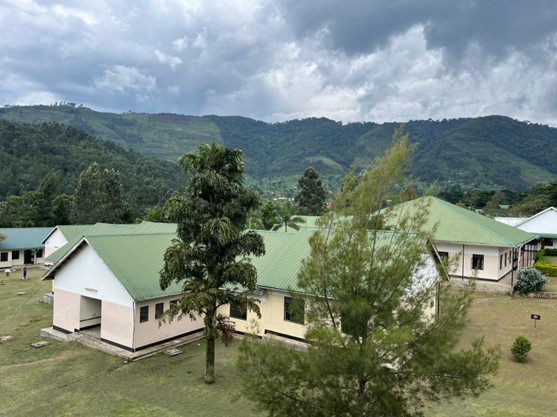
“Traveling and working in Southwestern Uganda with BCH, located at the entrance to the Bwindi Impenetrable Forest, is an experience I would highly recommend to any resident with an interest in Global Health, or simply a desire to diversify their perspective on what it means to be a doctor. The experience is singular, completely one of a kind, and as someone who has worked at BCH, walked with the Batwa, and eaten more matoke than I’m willing to admit, I can tell you firsthand that this is an experience that will stay with you long after you return stateside. Any medical resident looking for a truly surreal and life-changing experience in Global Health should highly consider this opportunity. My one caution is that this experience is not for everyone as many of the modern conveniences that you may be accustomed to will not be readily available in Southwestern Uganda. Additionally, you will be entering a space and providing care to a demographic that will fully view you as an outsider. Therefore, a genuine respect for other cultures and a sincere willingness to learn from and engage with the community is not just recommended but required. Make no mistake, this is an adventure and one that should not be taken lightly.
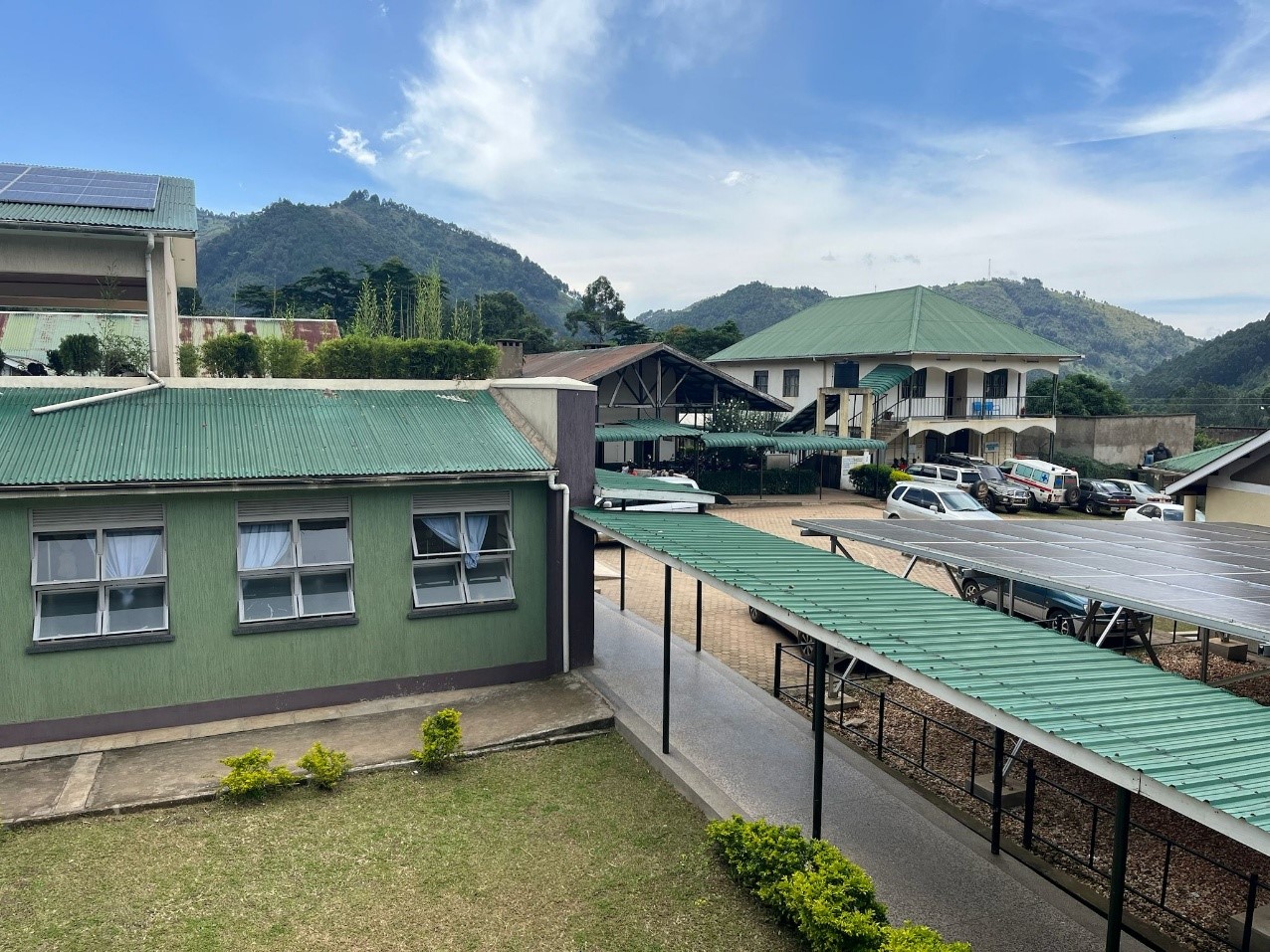
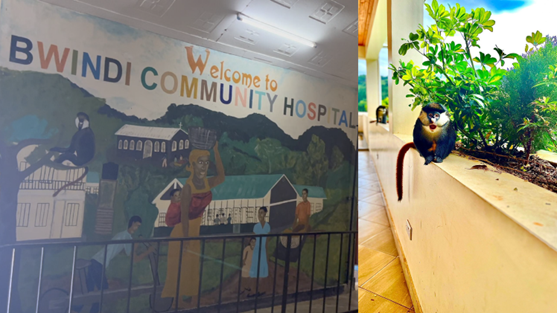
That being said, should you choose to pursue this incredible opportunity, you will have encounters with patients, people and even wildlife that will completely alter the way you practice medicine and even how you go about your daily life upon your return. There is an incredibly diverse spectrum of pathology and patient presentation that you will encounter during your clinical time. Furthermore, there are countless ways to get involved with various research and quality improvement projects in order to better understand and address how to best facilitate healthcare delivery in a region as unique as Southwestern Uganda. Lastly, you will have the nightly opportunity to sit at the dinner table alongside and share experiences with other medical professionals from all over the globe as well as local community leaders from just down the road. All that being said, if you are looking for a truly unique and potentially career defining experience in Global Health, look no further.”
Alumni Testimonials
Graduate, 2019
Gastroenterology & Hepatology Fellowship, CPMC
CPMC was the perfect fit for me! As a quaternary care center in the heart of San Francisco and a referral center for Sutter’s vast system of hospitals, I saw a breadth of pathology over the last three years that I never expected to see outside of textbooks. These valuable clinical experiences were supplemented by the program’s remarkable dedication to teaching through daily morning reports and 12:00 pm conferences. The culmination of these three years have empowered me to feel confident in my training to both care for patients and continue as a lifelong learner. I am truly grateful for the kind and supportive learning environment fostered by the leadership and attendings. Day-to-day, I believe the little things matter and I credit the CPMC family including my peers and ancillary staff for making each day both challenging and enjoyable. I am thankful to have spent my last three years training at a special place like CPMC.
Cardiology Fellowship, CPMC
CPMC is truly one of the hidden gems of San Francisco for Internal Medicine training. Throughout my three years as a resident (2016-2019), the camaraderie and teamwork amongst the house staff, attendings, and administration are unparalleled. Residents receive excellent training to become a competent physician, and the program truly cares about your individual career goals, whether that be in primary care, hospital medicine, global health, or fellowship training. Other major positives about being at CPMC include participating in high yield morning reports organized by chief residents and having tons of fun outside the hospital with retreats and happy hours. I have been fortunate to have fostered lifelong friendships during my training and am excited to stay at CPMC for my Cardiology Fellowship! I feel anyone would be lucky to complete their residency training at this program.
Hospitalist, Kaiser Permanente Santa Rosa
When I first interviewed at CPMC I was immediately struck by the culture of the place. Everyone, from the Program Director down to the Interns, was warm and approachable. Morning Report was interesting and well run. Most importantly, the Residents all seemed to be genuinely happy. When I submitted my rank list, I went with my gut feeling and ranked CPMC #1. Having graduated, I reflect upon these most formative years of training and I can tell you this. Without hesitation, I would rank CPMC #1 all over again!
CPMC is the Quaternary referral center for all of Sutter Health in Northern California; the most complicated clinical cases are transferred to San Francisco. The diversity of our patients and the wide range of pathology we see is astounding. At CPMC, the Medicine you practice will be second to none. One such patient I had the privilege of caring for had a nutritional deficiency as a rare cause of Wernicke's encephalopathy. I wrote this case up as a Clinical Vignette for ACP and won Regionals and was a Finalist at the ACP National Conference. If you want to do research in residency, you will find ample opportunity and complete institutional support behind you.
As a resident, I felt part of a larger whole, a member of the CPMC family. Many of our Attendings were former Residents and Chiefs who have stayed on to practice because they just love it here. The Resident culture here is a supportive and nurturing one. We look out for each other here. Over the last three years, I have found lifelong friends among my co-residents and I have found Mentors with whom I will stay in touch with for life.
I feel well trained and ready for a career as a Hospitalist. I feel confident I could practice in any healthcare system nationwide. CPMC is a well-respected institution in California with an alumni network that spans the West Coast which definitely helped while applying for jobs. As a excited as I am to become an Attending physician, I will truly miss my time as a CPMC resident; I am a competent and well rounded physician and a better person for it.
Preliminary R1, 2018-19
Radiology, Stanford University
CPMC has been an excellent institution to perform my preliminary medicine year before radiology residency. The variety and volume of cases provided ample opportunities to grow as a clinician. The environment at CPMC fosters lifelong learning and curiosity; the morning reports are certainly one of the best features of the program! The CPMC community is highly supportive on both professional and personal levels. I developed strong bonds with my fellow residents, and I will look back upon this year with great memories.
Ophthalmology, University of Indiana
Reflecting back on the past year, I would pick CPMC again in a heartbeat! Though intern year will always be challenging (and the great clinical training at CPMC needs no introduction), I couldn’t have asked for a better group of people to experience it with. From debriefing challenging patients to Lori’s homemade mochi to attendings treating us to lunch, I felt so cared for and valued this year. Everyone I met was not only interested in my professional development, but also in getting to know me personally as well. I feel so fortunate to have spent my intern year with mentors and peers who will remain close friends for the rest of my life.
Graduates 2007-2018
Preliminary R1, 2017-18
Anesthesia, UC San Diego
Having attended Dartmouth for medical school, I experienced CPMC not only as a preliminary intern but also as a medical student on my first clinical clerkship. During my 3rd year rotation, I was struck by the engaging morning reports, the diverse patient population, and the collegial work environment. Rounds provided me with a firsthand look at how CPMC attendings and senior residents prioritize the patient experience, take time to teach, and treat categorical and preliminary interns equally.
Upon returning two years later, I was welcomed back by the affectionate CPMC family. On my ICU and inpatient medicine months, I again benefitted from the campus being a major referral and transplant center for Northern California as our teams managed a wide range of clinical pathology while respecting cultural differences among our patients. During my elective time, I rotated through inpatient hepatology, renal transplant, advanced heart failure, echo, and PM&R to round out my preparation for anesthesiology. I also appreciated the opportunity to work with UCSF faculty and residents while rotating at SFGH for emergency medicine.
In my remaining free time, I’ve hiked in Marin Headlands, eaten at hole-in-the-wall and Michelin star restaurants, explored the wonders of Golden Gate Park, and bonded with my colleagues at post-night shift brunches and intern dinners.
From the chief residents to program directors, I’ve been continually impressed by how the program leadership responds to feedback, individualizes their approach to resident development, and works to make housestaff feel appreciated. As I look forward to continuing my training at UC San Diego, I am grateful for the ways in which CPMC has shaped my growth as a physician.
Graduate, 2014; Chief Resident 2014-15
Hospitalist, CPMC Pacific Campus
CPMC fulfilled this with flying colors however what exceeded my expectations was THE PEOPLE. Throughout my residency I felt completely supported by the GME staff, faculty, and co-residents and have developed friendships that will last a lifetime. I am now a hospitalist seeing 14-20 patients a day and I feel CPMC has properly trained me to handle whatever workload or zebra diagnosis that comes my way.
Graduate, 2011
Director, Gastroenterology Education & Research, Highland Hospital ACMC (Oakland)
Gastroenterology & Hepatology, Highland Hospital ACMC (Oakland)
My time at CPMC spanned 2008-2011 as an internal medicine resident. During these early formative years in my medical training, it was clear that CPMC was dedicated to providing cutting edge medical care with a focus on medical education across all disciplines. From the friendly and supportive staff in the GME office who I’ve come to regard as an extended family, to the team of dedicated attendings including hospitalists, primary care physicians, and sub-specialists, the culture at CPMC is an attractive and unique feature of this teaching hospital. Trainees are encouraged to grow and develop their early careers in a supportive, resourceful and welcoming environment that thrives in teamwork and camaraderie. It is this wonderful combination of great people and supportive environment that I attribute my success at matching into a GI fellowship. I am happy to say that I have the opportunity to continue being a part of the CPMC family as site director of the GI Fellowship rotation at Highland Hospital in Oakland.
Graduate, 2007; Chief Resident 2007-08
Primary Care, Palo Alto Medical Foundation
I came into residency not quite sure what I wanted out of my career and I left with a clear vision of not only my career goals, but also my life goals. This transformation seemed to evolve naturally over time with the help of a handful of mentors that I am eternally grateful for knowing. I cherish the time I spent at CPMC and am very excited for anyone who has the chance to train there.
Preliminary R1, Graduate
Dermatologist, Los Angeles Area
My decision to pursue an Internal Medicine preliminary year at CPMC, before doing my dermatology residency at UCLA, was one of the best decisions I have ever made. I would recommend it wholeheartedly to anyone doing either a preliminary year or an entire residency. There are a number of factors that make CPMC an incredibly special place and somewhere that you will not want to leave. Despite the rigor of internship, it was my favorite year of my life. The hospital is in a great location and attracts a diverse, interesting and friendly group of people. Though you will work hard, you will leave feeling gratified and happy at the end of every day. The nurses at CPMC, the GME office, the supportive and involved teachers, and your fellow co-workers are what make this place so very special. Like any large hospital, you will have ample exposure to interesting pathology, and on top of that the people who surround you are interested in learning and teaching from each other. There is a great balance of work life and an ability to enjoy life outside of work due to CPMC’s phenomenal location. I can almost guarantee you that, like me, you will remember your time here fondly and will hope someday to come back!
Living in San Francisco
There’s never a dull moment in San Francisco, a national hub for culture, dining, outdoor activities, local events, theater and parades. Experience the mountains, beach, and city in one iconic place that’s an easy drive away from wine country or skiing.
Contact Us
Program Coordinators
Katie Say Cheng
Program Director
Maggie So, M.D., FACP
Follow us on Instagram @cpmcimresidency